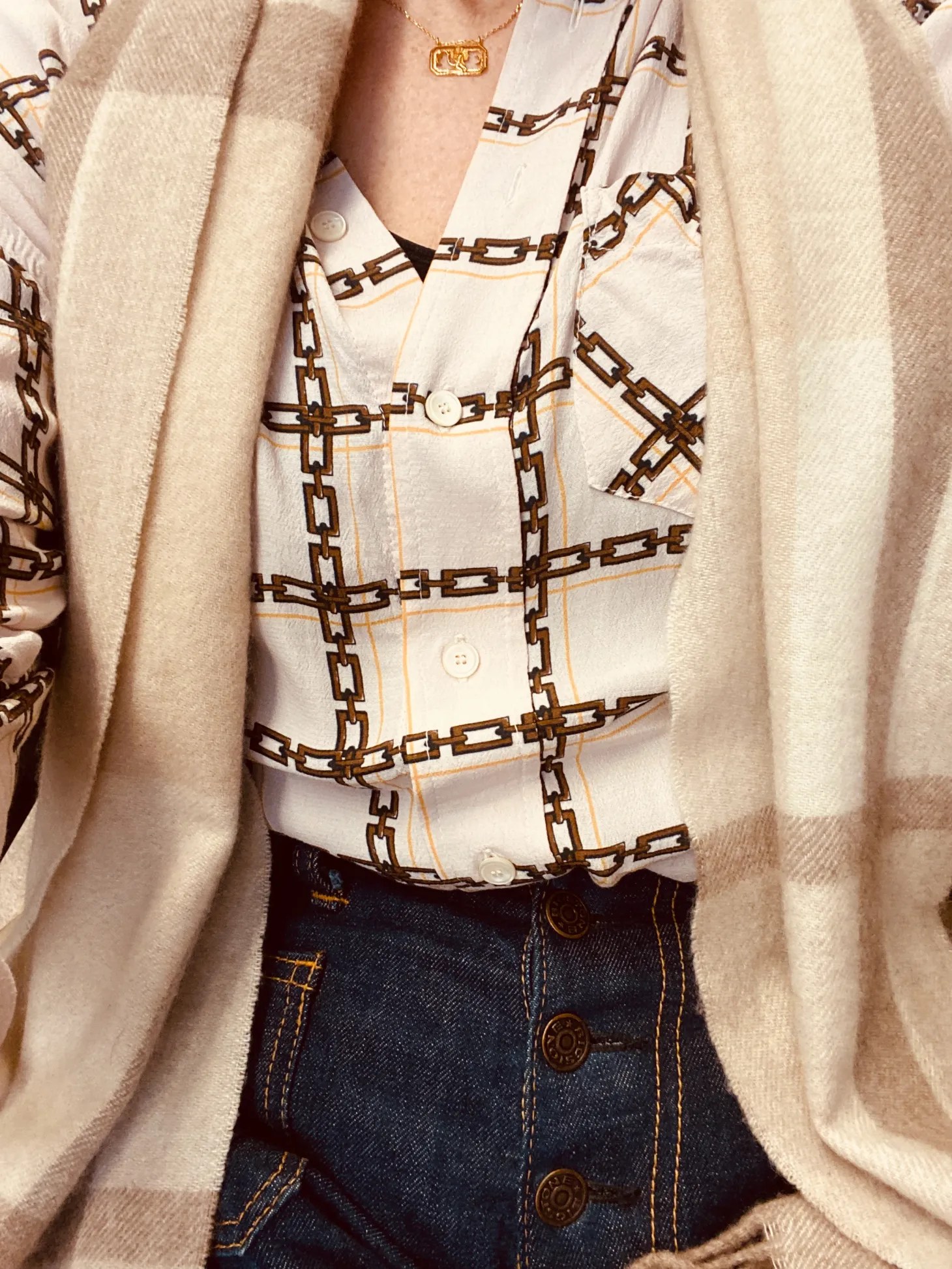
I have been buying vintage and second hand fashion for a long time, way before it was a trend. I have champagne taste on a beer budget, and most of my really high quality items were bought pre-loved. I buy items new with tags, or in excellent condition. I also only buy things that don’t go next to my skin so I have never had a problem with the fact that they were bought on the resale market. Furthermore, I only buy things that are washable.
Sweden did not find charity shops or second-hand appealing until very recently, and there was almost a sense of shame in browsing charity shops. However, the whole circular economy has exploded, and it is now predicted that sales of second hand items in Sweden will be higher than that of new items in a couple of years. People are invested in the environmental aspect, and are moving away from fast, disposable fashion.
There are generally two main second-hand models in the fashion sector:
The first is charity shops, which receive donated items from the public and some companies. They then sort them centrally and sell them at shops. Some of these shops have different profiles for each of their stores – the ones in shopping malls sell mass-market type clothing for adults and children. The ones in tourist areas tend to sell more small items such as crystal ornaments, silverwear and jewellery. The ones in hipster areas tend to sell designer items and true vintage. Nowadays the stores are more curated, although they are still dependent on what items are donated. They have less of a jumble-sale feel these days, and more of a ‘look we are a regular shop!’ feel. They are found more often in high-footfall city centres, which was unthinkable five years ago. The prices have, unfortunately, risen at the same time. Another trend for charity shops is to sell anything valuable online, and put the less valuable items in store. I think there is the same trend in the US.
The second model is consignment stores, which carefully choose which items to accept. It has to be seasonal and on trend, or classic. These shops usually take 60% of what they sell the item for. If the item has not sold within a month you can collect it, or they donate to charity. You receive your money when the item has sold. These stores are more pricey – and getting pricier. There are many of these small shops popping up in Stockholm and then closing just as fast. In order to be attractive, you need high stock turnover, the right items, and good prices. Not all of these shops have that balance right.
A shop near me pays cash for clothing but you get very little. This model is unusual. This shop used to sell items from sample sales, but have told me that fashion companies now sell their samples online or at physical sample sales. This particular shop is a retail shop but it has a small second-hand corner. Some H&Ms now also have a small curated second hand section, containing many different brands.
A new concept that I have come across is Vintage & Friends in Stockholm (and soon Gothenburg). The owner travels to the largest sorting centres for second hand items and chooses items he believes are trending. They are then washed, ironed, and sold in-store.
Eric Hammel buys literal tons of clothing every couple of months and the sell-through rate is enormous. His huge advantage is that he knows fashion and has worked with it all his life. He has an amazing eye, and also designs his own clothing.
When he first started Vintage and Friends, I wondered how it would go for him because the second-hand space is becoming so saturated and is competing price-wise these days with retail brands. But they are going from strength to strength. Primarily because he can spot trends and then search for items accordingly. I am still kicking myself for not buying one of Erik’s own-design gorgeous pleated skirts from his first shop. The target audience skews young, but he has, for example, gorgeous Chanel-style jackets and amazing handbags that appeal to all ages. He prices his items really well. They are not cheap, but they are a third of the price that you would pay in-store. Y2K fashion is really big at the moment and Hammel is buying a lot of that right now. He sells the genuine item from the early 2000s at a third of the price the big fashion houses are taking for retail reproductions. True Religion jeans from the turn of the millennium were much better quality than the True Religion being manufactured now.
V & F recently had a huge delivery of authentic vintage Harley Davidson items. They had the most glorious leather jacket but I am squeamish about leather due to the amount of sweat that ends up in it. I may pick up a couple of t shirts for my husband though.
Eric Hammel handpicks the clothes sold at Vintage & Friends from wholesale suppliers abroad, who in turn buy the goods from large trading companies in the Middle East and Asia, where a large part of Europe’s clothes are shipped to be roughly sorted by hand. The labor there is significantly cheaper than in Europe, explains Johan Graffner, stating that Vintage & Friends buys from “limited companies”.
Eric Hammel travels abroad a couple of times a month to cities such as Naples, Paris, Rotterdam and Amsterdam. The duo also buys from Dubai, Pakistan, India and the USA, but then the purchases are made via Facetime.
– We buy two tons every other month, and about 2,000 pairs of jeans, says Eric Hammel, who recently returned from Amsterdam.
– I’m there for several days sorting. It’s a huge job, but it’s worth it every single time.
The store has around 200 categories for both women and men. The brands are American, French, Italian – it’s everything from leather jackets, knitwear, sweatshirts and jeans to some shoes. About 500 pairs of Uggs were sold during the winter.
– We also have expensive, fun brands that are of course authentic and with documented provenance such as Balenciaga, Burberry, Louis Vuitton, Moncler, Stone Island, Barbour and Juicy Couture, and also signed football shirts and accessories, adds Eric Hammel. [source, translated from Swedish]

I’m impressed with this ‘true recycling’.
I never throw clothes away, my clothes are always cared for. I have always donated to charity shops hoping they will have another life.
The difference with Vintage and Friends is that the co-owner has an amazing eye. He cherry picks top-notch clothes and designers that would have otherwise ended up in landfill. Industrial mass-sorting of clothing does not have the expertise he has. He is also willing to do a lot of work to find the gems.