
I recently wrote about watching the Senna and Schumacher documentaries. After that I watched SuperSwede, a documentary about Swedish Formula 1 racing driver Ronnie Peterson. He was also killed in an accident. The SuperSwede documentary featured quite a few grave accidents, because this was a time when F1 had many fatalities. Luckily, after Senna’s death a great deal was done to make the sport safer and there was not a single Formula 1 fatality between 1994 and 2014.

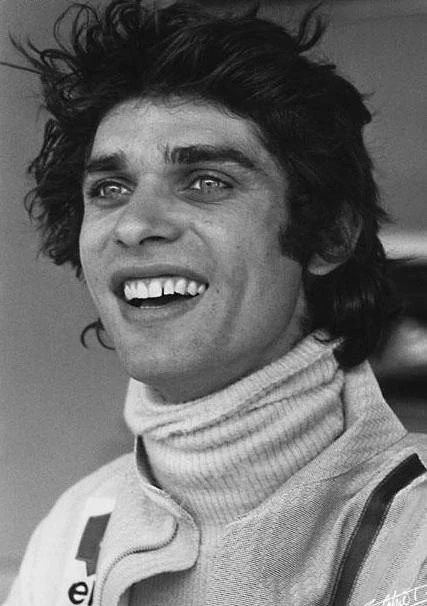
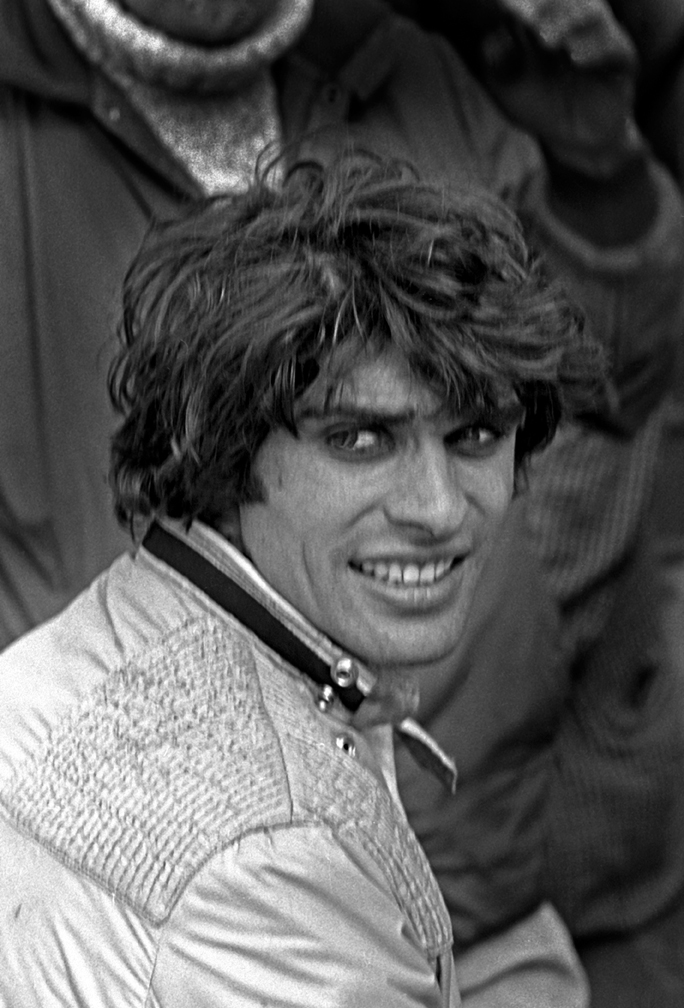
One of the drivers featured in the SuperSwede documentary was François Cevert, a name I had not heard for years. Cevert – who was killed in a horribly gruesome crash at the age of 29 in 1973 – was an up-and-coming talent in Formula 1 racing and was almost preternaturally beautiful. Even in black and white footage, his light eyes looked straight through the screen and beyond, and his beauty was almost shocking. He was flamboyant, larger than life, mercurial. He drove really fast and yet was a very obedient mentee to Jackie Stewart, staying behind him in races even when he could have overtaken and won. He was being groomed to be the Tyrell team leader after the legendary Jackie Stewart, and would probably have had a stellar career.

South Africa only got television in 1976, one of the last countries in the world to have a regular television service. The apartheid government opposed the introduction of television for decades, calling it evil, the devil, a box to disseminate communism and democracy.
As a result, we did not watch Formula 1 on television in those days. We listened to races on the radio, saw them on newsreels (for example Movietone News, which featured current affairs and news before the interval and main feature at the movies), and read it in months-old magazines (everything had to come by ship). I read about all these famous sportspeople in my dad’s magazines and made scrapbooks.
In those days – even in other countries – sportspeople were not the superstars they are today. They were very dependent for income on agents and managers, and their companies. They may have been in magazines and on television news, but not more than that.

Today, Cevert would have been famous from day one because of his looks and talent. On social media, in fan groups, with designer collaborations, entertainment (he was an amazing pianist). His revenue streams off the track would bring in more money than his entire racing career. He could control his image, and tweet his every thought if he wanted to. On the other hand he would also have been besieged by trolls and haters, and probably stalkers who felt they knew him.
Influencers can be paid way more than $1 million per sponsored post these days. Christiano Ronaldo has more than 350 million Instagram followers. Despite this, older sports personalities say they preferred the times when sport was pure sport with no huge deals or multiple revenue streams. You did it because you loved it. What do you think?





Sorry for the dumb question, but how famous was he during his lifetime? I get mixed responses from people ranging from ‘he was extremely well known world-wide and was at the level of Alain Delon’ to ‘he was only a national celebrity that was rising in popularity’. So I’m quite confused.
There is no such thing as a stupid question so ask away!
I can only speak from my own experience, and I was very young at the time. Cevert was seen by F1 fans as Jackie Stewart’s successor, so there was a lot of interest in how he would develop. Stewart was a legend and he had taken Cevert under his wing. The fact that Francois was also very good looking and a classical pianist meant he received more media attention in certain sectors of the media than other drivers. He dressed very flamboyantly in his private life, and modelled for several clothing brands, for example, causing him to appear in magazines that usually never featured F1 drivers.
I am not French but I would imagine that he was also way more famous in France than other countries. In the same time period as Francois, South Africa had Jody Scheckter, who was incredibly famous in South Africa (far more so than Cevert), but received way less attention worldwide. It’s strange to think of times before live broadcasts, globalisation and social media, where fame happened in certain niches and pockets. The fact that he burned so bright and so briefly after a short career probably added to the legend afterwards.
More or less the same thing happened with Nirvana, the grunge band. They were still playing in small clubs with tiny audiences when Nevermind/Smells Like Teen Spirit was released and took off like a rocket. A lot of people think they were a huge stadium band at the time, but they weren’t. They were just a band in the niche grunge scene playing in tiny, sweaty clubs and they suddenly went stratospheric without anyone being prepared for it. And of course after Kurt’s death, a legend grew out of everyone’s different memories. Now kids are learning about Nirvana from their parents (who all have different recollections) and fan groups.
Great talent killed too young in his life.
He is buried not far from where we live, about a 20 minute drive from here.
If you ever go past, would love a photograph! I liked that he was really fast but he always used to obediently follow Jackie Stewart, who was his mentor. So young and such a horrible death.
I will try and find his burial place. I know where it is on the map and I will be passing by there in a week or so’s time.
Oooh exciting! Thank you Steve!
He is buried in a small village in Touraine called Le Vaudelnay. He was a family friend He is burried next to his mother Huguette. The grave is adorned with cars , notes flowers
Thank you for this. I am so sorry for your loss.