

Of course, lots of British food is done badly, as is much food everywhere. When I lived in Rome, which has splendid food, there is enough crap food served in tourist restaurants to sink the Costa Concordia. McDonalds has invaded every point of the globe. All over the world, industrial food is flooding the market with tasteless, dubious products. Bad pastry is always bad; lemon curd from a jar tastes like Joy dishwashing liquid.
To my mind, life is too short to eat bad food. Chef Michael Chow once was quoted “to eat a bad meal is expensive, a waste.” I could not agree more.
So when I discovered the “Two Fat Ladies” cookery show I was enthralled. This pair of women represented a confluence of so many things I love; eccentricity, humor, story-telling, excellent food, and a totally uncompromising attitude towards what we eat and how we live. Their derision towards low-fat foods, supermarkets, vegetarianism, and many other contemporary food rules was splendidly refreshing. Watching Clarissa and Jennifer use proper ingredients, salt, lard, butter, meat, and use them well reinforces the idea that quality is king when it comes to food.
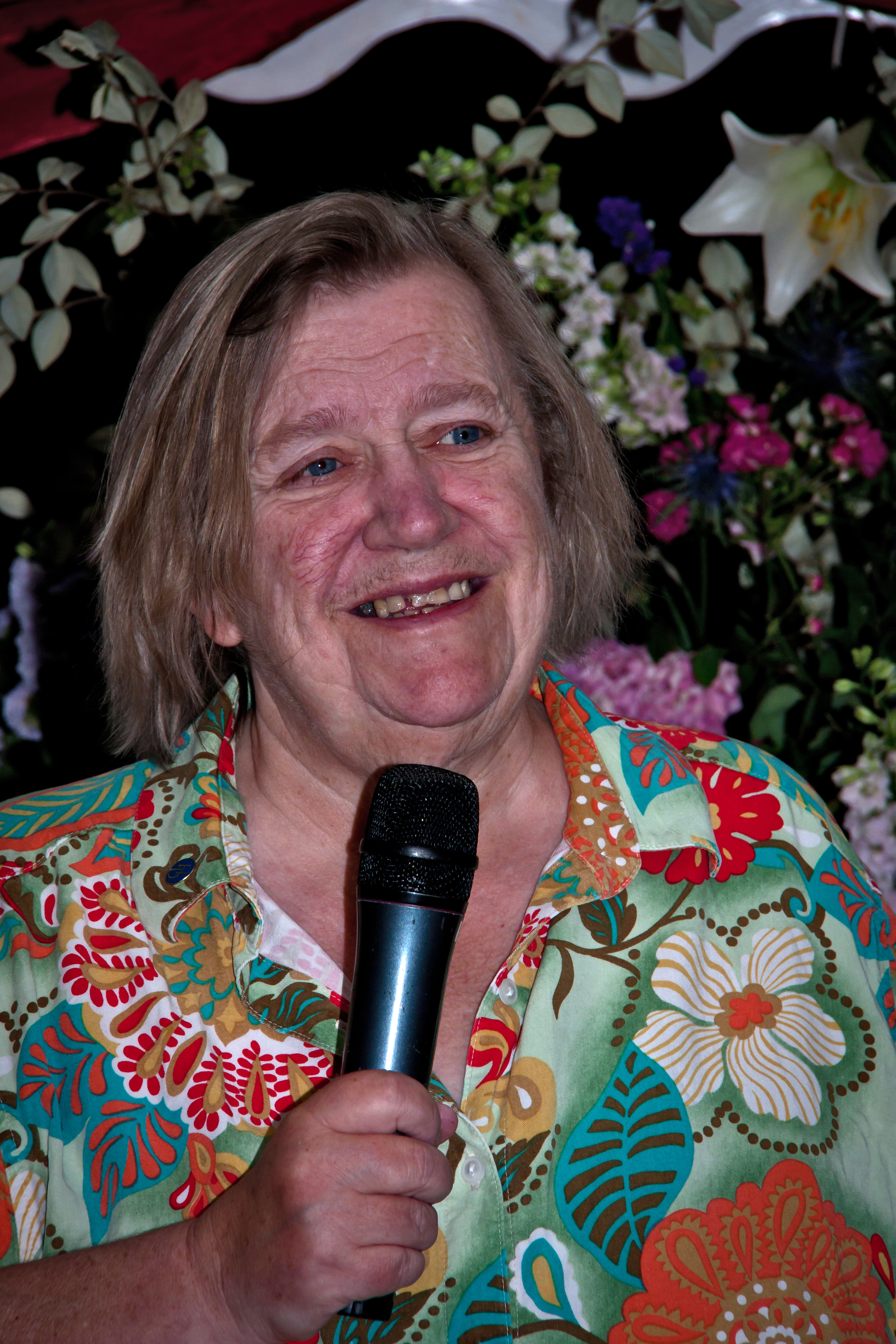
While Jennifer was the more engaging of the duo, I always have found Clarissa Dickson Wright to be particularly compelling; I admired her for her courage and forthright nature. She pushed the envelope and gave me the courage to create and consume good food without guilt; watching her spread butter on spatchcocked chicken or slices of bread in the manner of frosting a cake, listening to her insist that lard is the only fat to use to make a proper bubble and squeak gave me permission to use good ingredients and create wonderful things to eat.
Long before Whole Foods ushered in a fetish for “fresh and local”, Clarissa was insisting on proper food and was procuring it from farmers and artisans on Two Fat Ladies. We watched Jennifer and Clarissa zoom onto farmsteads on a vintage Triumph motorbike to visit the deer or pigs or cattle which would be their roasts or medallions or chops when they returned to the kitchen.
Clarissa spoke openly about her battle with alcoholism; as a person also recovering from an excessive drink habit, I admire her willingness to share her stories; it is not easy to share these stories, especially as so many people simply do not understand alcoholism and view it as a personal weakness as opposed to the great personal strength it takes to manage to remain sober on a day to day basis.
I blame Clarissa and Jennifer for my current routine of the weekly 50 mile drive to procure a large percentage of my food directly from farmers; for my haphazard attempts at growing vegetables all over my urban yard; for my heavy use of American-culinary taboos of fats, small “fishy” fish, egg-laden dishes, and willingness to try any type of food imaginable.
Clarissa Dickson Wright expanded my world, and for that I am truly grateful.