When we communicate across cultures, more than just language defines us. The parts of our own culture we bring with us to an international meeting can surprise, shock and even offend people from other cultures. This can scupper a deal before it has even started. I work as a mentor, coach, translator, teacher and language consultant. Part of every single intensive course I teach is a module on cross cultural communication.
Some things to bear in mind are attitudes towards:
- Dress (formal or informal? Are bare legs and sandals allowed? Or short sleeves?)
- Punctuality (see below)
- Small talk (Swedes don’t do small talk so one of the most popular modules I teach is conversation, small talk and socializing)
- Hierarchies (calling people Mr/Mrs/Ms, addressing people by their first name, flat organisational structures vs traditional hierarchies)
- Taboos (talking about sex, sexuality, salary, religion, politics, abortion)
- Gifts (is a gift expected or will it be considered a bribe? Up to what monetary value are people allowed to accept gifts?)
- Table manners/Food and drink (saying Grace, who eats first and what about eating with your fingers?)
- Gender roles/Men and women (treating women as equals, negotiating with young women, shaking hands with a woman, who makes the coffee)
- Body Language and gestures (patting top of head, showing sole of foot or shoe, the middle finger, demonstrative body language)
- Physical contact (hugging, kissing, shaking hands, touching people)
- Personal questions (can you ask people about their family? Or if they are married?)
This post is about timekeeping.
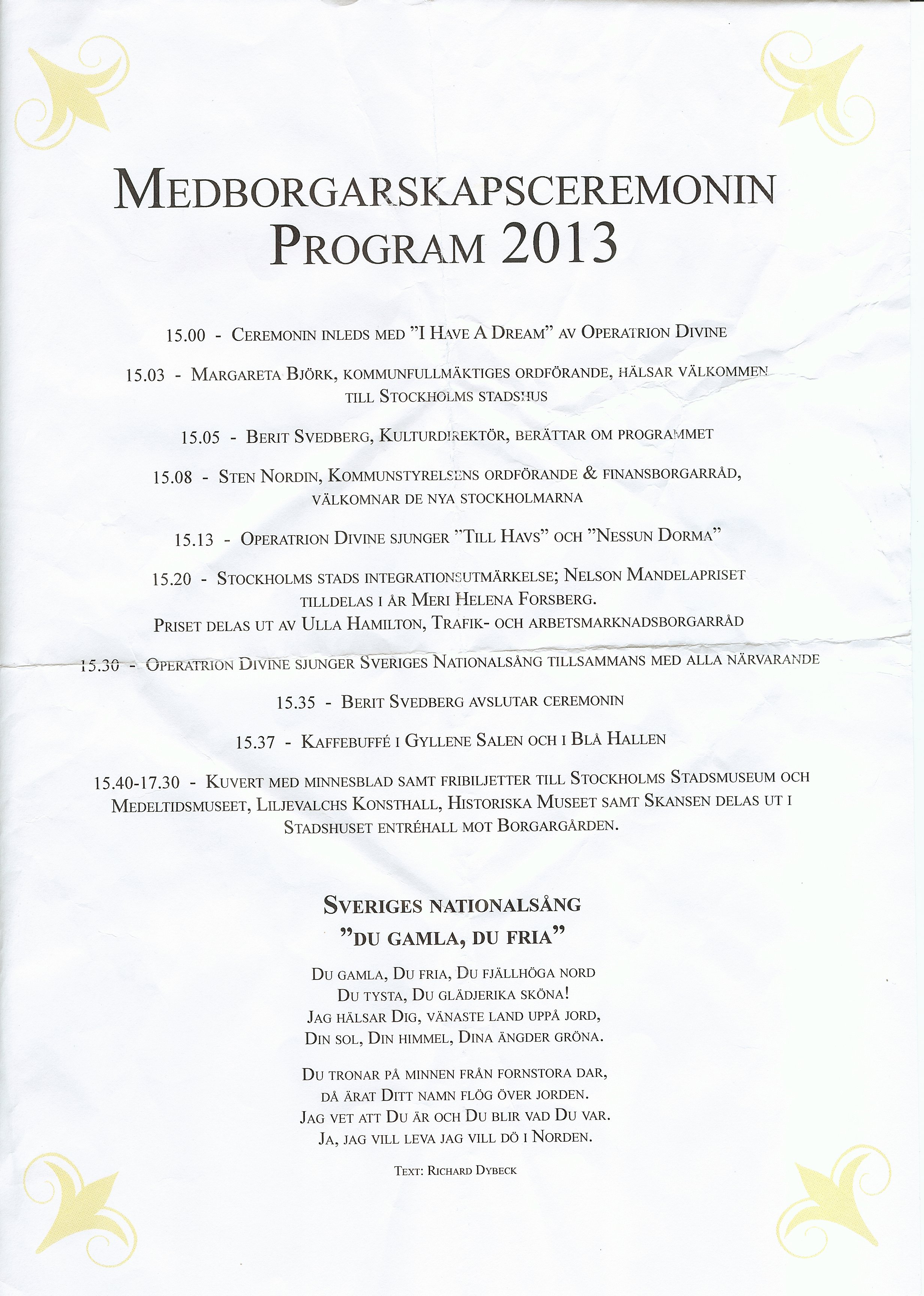
Punctuality is very important to Swedish people. If you are invited to someone’s house for a meal you are required to be on time. Not late and definitely not early. If you arrive even five minutes early you walk around the block or wait outside until the time. The maximum you can be late to a meeting is about five minutes. But then you do need a good reason.
The authentic document below will show how strict Swedes are about time. This is a program from a citizenship celebration held last week (on a public holiday). Note that the slots are as small as three minutes. And everyone was on time until one of the last speakers went over their allotted time by a minute or two. At that point everyone started to wriggle, whisper, fiddle with their phones and shuffle their feet. The last two slots are interesting so I will translate them – the coffee buffet started at 15.37 and exactly three minutes later (at 15.40) you could collect your certificate and gift package.